
Want to visit the Sanur Morning Market? We go every time we stay in Sanur. Every time. Bec is not a morning person and loves a sleep in, but a morning market is one of the things she will get out of bed before sunrise for.
Forget the sleep-in. You need to be up and going by 6am to see it properly. Turn up any later and you’ll find the market already packing up. Don’t make the classic tourist mistake of rolling up at 8.30am.
What to expect at the Sanur Morning Market
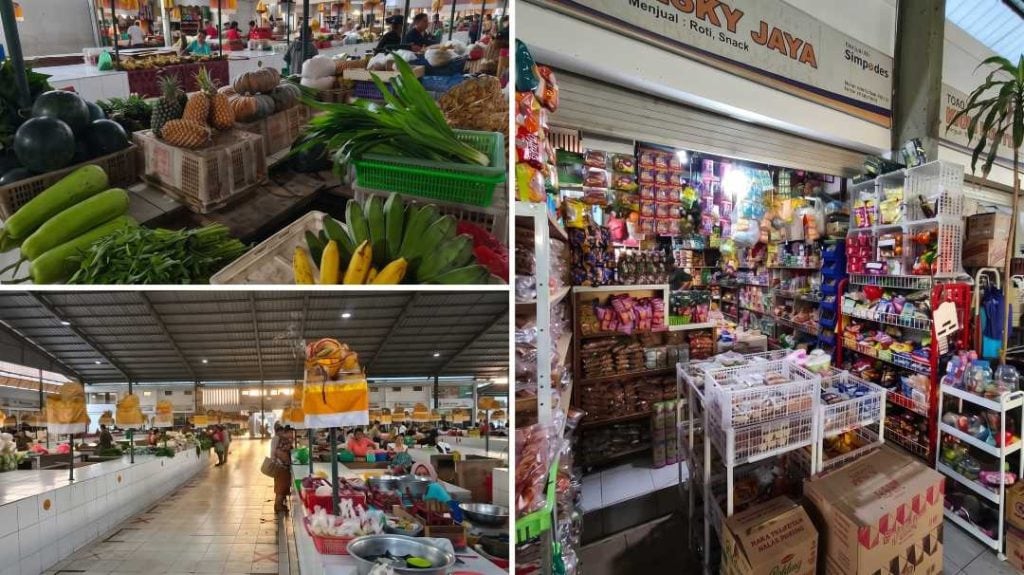
Walk in the door and the smells hit you first — the fresh produce, fried pisang goreng, Balinese spices and incense all at once. And the fresh fish section, well, that has an aroma all of its own, i can tell you. The whole market is housed inside one big enclosed square building, so it’s easy to miss from the street if you don’t know it’s there.
What will I find at the Sanur Morning Market?
The fresh stuff — fish, meat, fruit and vegetables — sits in the middle of the building. Around the edge, but still inside, are the small shops selling everyday bits: spices, cleaning products, pots, pans and the like.
This is a proper working market, where locals, plus the restaurant and cafe owners, come to buy their daily fresh food. You’ll find people selling breakfast too — the super tasty pisang goreng (fried banana) and coconut-flavoured rice are everywhere.
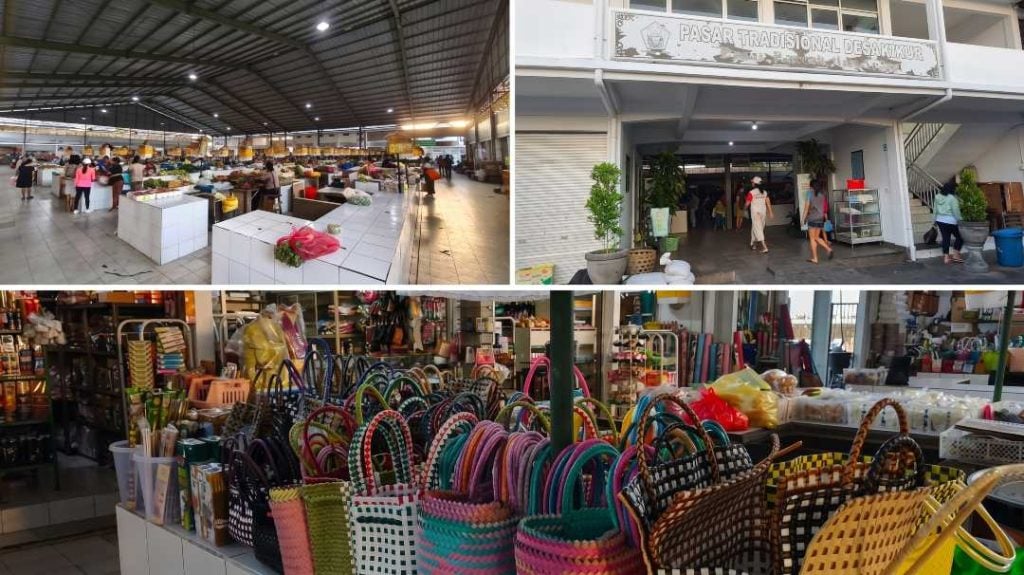
You will find stands selling Canang Sari as well, the little Balinese offerings used in daily Hindu ceremonies. You’ve almost certainly seen them on the footpaths around Bali, and it’s considered disrespectful to stand on them.
One thing worth knowing: this same building is where the Sindhu Night Market sets up each evening, in the courtyard out the front. Same spot, completely different feel — fresh produce and locals in the morning, street food and crowds after dark. If you’re in Sanur it’s worth doing both. We’ve got the full rundown in our guide to the markets in Sanur.
What to buy at the market
Wondering what’s actually worth picking up? Here’s what we always end up with in our bag:
- Pisang goreng (fried banana) — crispy, warm, and sold fresh all morning
- Jaja Bali — traditional Balinese sweets made from rice flour, palm sugar and coconut, often wrapped in banana leaf
- Tropical fruit — rambutan, snake fruit (salak), mangosteen and dragon fruit, cheaper and fresher than any supermarket
- Fresh coffee — local vendors sell Balinese coffee by the cup if you need a hit before you keep exploring
- Woven baskets and homewares — a practical souvenir that isn’t aimed at tourists
Go hungry. Breakfast is half the reason to be there — grab a few pieces of pisang goreng and a coffee and eat as you wander.
How much does it cost?
Prices here are set for locals, not tourists. A bag of fruit or a few pieces of pisang goreng costs a fraction of what the café down the road charges. There aren’t price tags on much, so a bit of friendly back-and-forth is normal — but go easy. Prices are already low and these people are trying to make a living in a country where wages are extremely low. We’ve never felt the need to haggle here unless we knew we were being ripped off.
How do I find the Sanur Morning Market?
Tip: tell your driver “Pasar Sindhu” — it’s more reliable than the pinned map location.
Finding it can be tricky, and you’re right to be confused by the address. When friends visit Bali and want to go, i tell them to forget Google Maps and just ask for Pasar Sindhu, or the morning market near Jalan Pasar. Every driver knows exactly where it is, even when the internet doesn’t quite have it right.
How far is the market from the main Sanur hotels?
The market sits in the middle of Sanur, so from most of the main beachfront hotels it’s a short walk or a quick, cheap Grab. Here’s a rough guide to how far it is from some of the popular places to stay:
| Hotel | Walking distance |
|---|---|
| Segara Village Hotel | 650 m |
| Griya Santrian | 1.1 km |
| Meru Sanur | 1.2 km |
| Maya Sanur Resort | 1.6 km |
| Prama Sanur Beach Resort | 3.1 km |
If you’re staying up near Segara Village it’s a quick stroll, and from Griya Santrian or Meru it’s an easy enough walk along Jalan Danau Tamblingan to start the day. From the Maya, and especially the Prama down the southern end at 3.1 km, you’re better off grabbing a scooter or a Grab rather than walking before the sun’s properly up.
Getting there
- On foot: easily walkable if you’re staying in central Sanur
- By scooter: plenty of parking nearby, and the easiest way to carry your haul home
- By taxi or Grab: tell the driver “Pasar Sindhu” rather than relying on a pinned map address
Top tips for visiting the Sanur Market
One tip i always pass on: bring small bills. The stall holders appreciate not having to break a big note first thing in the morning. And bring your own bags — better for the environment, Bali has so much plastic pollution already.
A few more things we’ve learned from going back again and again:
- Wear shoes you don’t mind getting wet. The fish and produce areas can be damp underfoot.
- Bring cash in small denominations. Card payments aren’t a thing here.
- Ask before photographing vendors. A smile and a nod usually gets you a yes.
What to do after the market
If you’ve still got the morning ahead of you, Sanur Beach is a short walk from the market and a lovely spot to cool off with a fresh coconut. It’s also a good time to grab a proper breakfast at one of the nearby cafés if the market snacks didn’t quite fill you up.
Why we keep going back
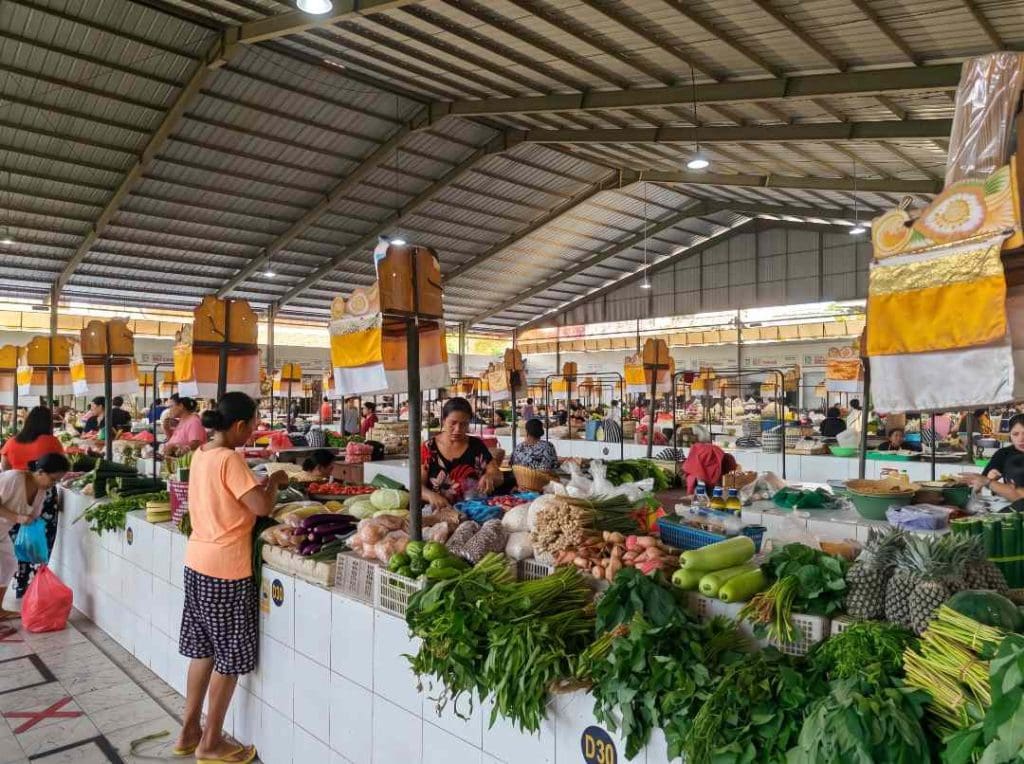
The best thing about the market isn’t the shopping, really. It’s that you’re standing in the middle of actual Balinese life for half an hour. Families doing the weekly shop, drivers and tour guides getting a cheap breakfast, ladies working their stands weighing out chillies and coriander. It’s not a market for tourists. Half of Bali feels like it’s designed especially for tourists these days, and this doesn’t — and that’s the whole reason we keep setting an alarm for it.
FAQs about the Sanur Morning Market
What time does the Sanur Morning Market open?
The market gets going around 5:00–6:00am. By the time most tourists are having their first coffee, vendors are already starting to pack down, so arriving before 7:30am is essential if you want to see it in full swing.
Is the Sanur Morning Market open every day?
Yes, it runs daily. It’s a working local market rather than a tourist attraction, so it operates on the same rhythm every morning, holidays included.
What time does it close?
Most stalls start winding down from around 8:00am, and by 9:00am the bulk of the produce vendors have packed up. A few of the shops selling household goods stay open a little later.
Is this the same place as Sindhu Night Market?
Yes — it’s the same site, Pasar Sindhu on Jalan Pasar, just a different time of day. In the morning it’s a fresh produce and local goods market; by evening the same space transforms into Sindhu Night Market, a street food market running from around 5pm to 10pm.
Do I need to pay an entrance fee?
No, there’s no entrance fee to browse the market.
Can I pay by card?
No — bring cash, and small denominations are best. Vendors here deal mostly in small transactions and may not be able to break large notes early in the morning.
Is the Sanur Morning Market touristy?
Not really, which is part of its appeal. It’s used daily by locals, restaurant owners and cafe owners sourcing fresh ingredients, so you’re seeing genuine daily life rather than a market set up for visitors.
How do I get there if Google Maps is confusing?
Ask your driver for “Pasar Sindhu” or “the morning market on Jalan Pasar” rather than relying on a pinned location — locals and drivers know it by name even when the map listing is off.

Mark & Bec
Things to do in Sanur
Two Australians who have been to Sanur many times. We have enjoyed food and drink on the beach, sipped coffee on Jalan Danau Tamblingan, stayed in homestays and hotels in Sanur and made day trips to see the best of Bali. We keep our information fresh by continuing to visit and getting first-hand knowledge from our Balinese friends.
Join our Things to Do in Sanur Facebook group
Share photos and tips, ask questions and connect with other Sanur travellers